Muzaffarnagar Fast Track Court Verdict; Judge Ravi Kumar Diwakar Says Spending a Decade Going Back and Forth to Court Is a Punishment in Itself
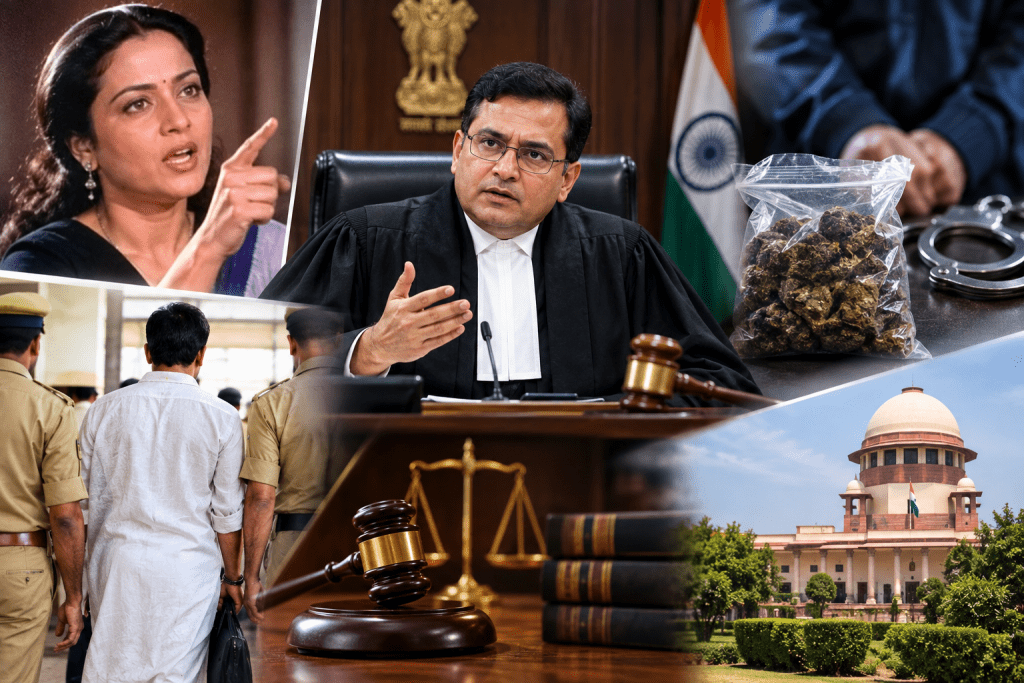
Muzaffarnagar: (SDNA) The famous dialogue “Date after date” from the film Damini once again came up during court proceedings. Additional Sessions Judge Ravi Kumar Diwakar of Muzaffarnagar Fast Track Court No. 3 acquitted an accused in a nearly 10-year-old case under the Narcotic Drugs and Psychotropic Substances (NDPS) Act. The court observed that facing a case for such a long period and repeatedly appearing before the court is itself a form of punishment.
Case Continued for 10 Years
The case concerns Ashok Bharti, a resident of Patel Nagar in Muzaffarnagar. Police arrested him on October 21, 2015, near Bhartiya Colony. According to the police, 150 grams of charas was allegedly recovered from the right pocket of his kurta.
The case subsequently reached the court, where proceedings continued for nearly a decade. Finally, on Thursday, after examining the evidence presented by the prosecution and reviewing the legal procedure followed in the case, the court acquitted the accused of the charges.
Reference to ‘Damini’ in Court
While delivering the judgment, Judge Ravi Kumar Diwakar referred to the well-known dialogue from the Hindi film Damini, which highlights the issue of repeated dates in court proceedings.
The judge observed that keeping a person involved in litigation for years can increase mental stress. According to the court, spending 10 years repeatedly appearing before the court is itself a punishment.
Several Gaps Found in the Prosecution’s Case
During the hearing, the court identified several shortcomings in the prosecution’s case. Despite the alleged recovery having taken place at a public location, independent witnesses were not involved.
The judgment also referred to inconsistencies in the evidence and alleged non-compliance with certain procedures required under the NDPS Act.
The seal related to the sample taken from the alleged recovery was also not produced before the court. The information provided to senior officials was found to contain deficiencies as well. The judgment also noted similarities and repetitive language in the police statements and the recovery memo.
2015 Case, Chargesheet Filed in 2016
Ashok Bharti was arrested in 2015, while the police filed the chargesheet in 2016. After a prolonged trial, the court held that the prosecution had failed to prove the charges beyond reasonable doubt. The accused was therefore acquitted.
Remarks on ‘Part-Heard’ Cases
Judge Ravi Kumar Diwakar also commented in his judgment on the legal provisions concerning the transfer and withdrawal of “part-heard” cases, meaning cases in which hearings have already commenced.
Referring to Section 412 of the CrPC and Section 452 of the BNSS, the judge observed that appropriate reasons must be recorded while passing orders in such matters. According to the judgment, sufficient reasons had not been recorded in the orders concerning the cases that were withdrawn.
97 Cases Also Mentioned
The judgment also discussed the limits of judicial and administrative powers. According to the report, 97 serious-crime-related “part-heard” cases pending before the judge’s court were withdrawn on August 19 and returned to the court of the District and Sessions Judge.
In this context, the judgment also highlighted the need to maintain a balance between judicial processes and administrative authority.
The verdict, delivered nearly a decade after the case began, has once again brought attention to the lengthy judicial process, procedural shortcomings in investigation, and issues concerning the rights of an accused.